Teaching and Learning at SAIS
At SAIS, we believe teaching is an active engagement with learners that enables their understanding and application of knowledge, concepts, and processes. Effective teaching involves thoughtful design, strategic content selection, engaging delivery, comprehensive assessment, and continuous reflection.
Our teachers are committed to transforming students from passive recipients of information into active constructors of knowledge. This requires not only subject matter expertise but also a deep understanding of how students learn.
As a professional learning school, we are dedicated to high-quality professional development and continuous improvement in our educational practices.
Our Teaching Commitments
All SAIS teachers:
Maintain high expectations for every student
Understand that meaningful learning occurs when students engage in critical thinking
Emphasize the importance of effort and persistence in achievement
Professional Development
We continuously strengthen our teaching practices through:
Subject Expertise Groups - Keeping current with subject-specific developments
Classroom Craft Meetings - Regular sessions focused on enhancing classroom pedagogy
Professional Learning Groups - Engaging with research-based educational evidence
Observation and Feedback Cycles - Improving individual teaching practices
Team Reviews - Enhancing collaborative teaching approaches
Whole Education Partnerships - Collaborating with other schools to improve institutional practices
Academic
We use a range of assessments to understand how students learn and where they excel. This helps tailor instruction to meet individual needs and learning styles.





Daily Structure:
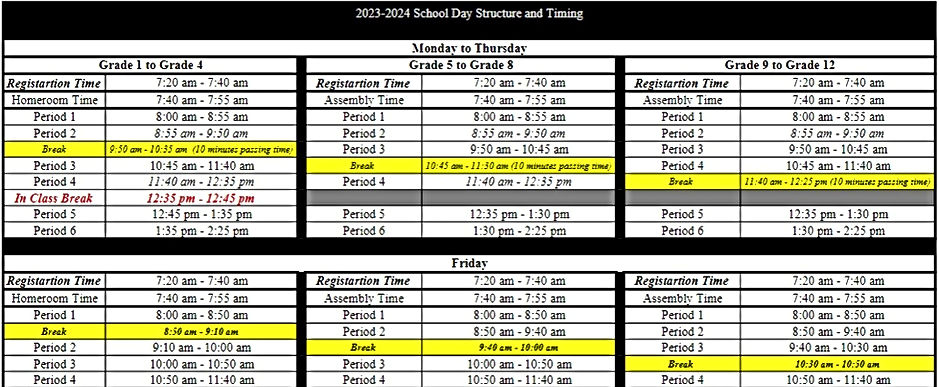
The school timing for grades 1-12 is as follows: From 7:30 AM to 2:25 PM from Monday to Thursday, and from 7:30 AM to 11:40 AM on Friday. There are 6 teaching periods from Monday to Thursday and 4 teaching periods on Friday. The length of each period is 50 minutes on all days. There is one break each day.
We will be much more assertive regarding tardiness and attendance. Those who report to school late will be sent back home and will access the lessons virtually. This will both improve attendance and punctuality rates and eliminate the crowding of latecomers near supervisor stations before they can enter the class after the first period.
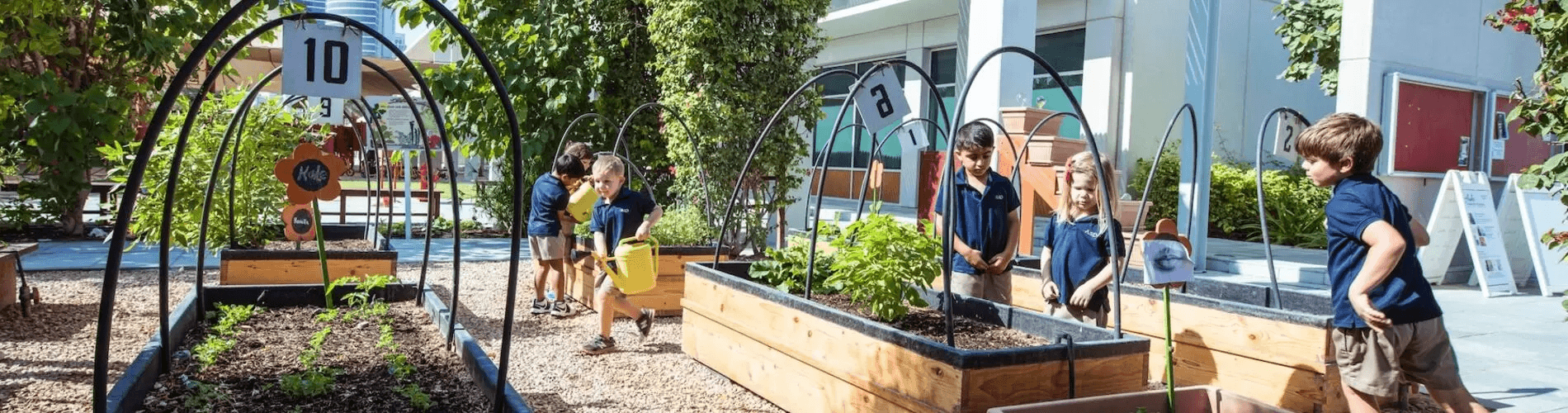
SAIS has implemented a comprehensive STEM program across our school. Our curriculum accommodates diverse learning styles, whether students are kinesthetic or visual learners, through an integrated approach combining text, videos, technology, and hands-on activities.
The STEM program provides students with a solid foundation in science, technology, engineering, and mathematics while exposing them to a wide range of future career opportunities. Our activities are designed to spark imagination and creativity, encouraging students to experiment, innovate, and find inspiration. Through collaborative projects, students develop positive communication, teamwork, inquiry-based learning, and essential social skills.
We challenge our students to explore the wonders of various scientific fields through our S.T.E.A.M. approach (Science, Technology, Engineering, Arts, and Mathematics). Students engage with robotic technology, learning about construction and programming using platforms such as Lego Mindstorm, SAM, PITSCO, and PASCO Kits. These resources help students understand different branches of engineering and problem-solving while integrating mathematics and physics concepts.
Primary School STEM Program (Grades 3-5)
Our primary school STEM curriculum establishes a strong foundation for students to develop literacy skills, numeracy abilities, and effective communication. Age-appropriate activities introduce students to fundamental STEM concepts while fostering curiosity and exploration.
Middle School STEM Program (Grades 6-8)
The middle school curriculum builds upon the primary foundation with more advanced concepts and challenges. Students develop analytical and reasoning abilities essential for tomorrow's innovative thinkers. Projects become more complex, requiring deeper understanding and application of STEM principles.
Our Artificial Intelligence courses are designed to test and enhance advanced problem-solving skills. These courses will prepare students for the competitive global landscape ahead by introducing cutting-edge technologies and concepts that are shaping our future.
School Library Information
Our school library serves as a Learning Centre for both staff and students, providing access to age-appropriate reading materials including books, magazines, periodicals, and e-books. We use an electronic library management system to facilitate daily operations and provide seamless access to all resources.
Library Locations
SAIS-Dubai has two libraries: a central library on the second floor and a smaller library in the KG section.
The libraries are open from 7:30am to 3:00pm, Monday through Thursday.
Students can search for materials using subject headings or the library management system. Section signs are posted on shelves to guide students. Students may browse independently or ask the librarian for assistance. Our electronic database systems and online library catalogs ("Researcher") help students find books or topics easily. Online resources are also available.
The librarian, teachers, and department heads collaboratively select library resources.
We use the Dewey Decimal Classification system (DDC), which organizes information into 10 broad areas:
000-099: General knowledge
100-199: Psychology and philosophy
200-299: Religion and mythology
300-399: Social science
400-499: Languages
500-599: Math and science
600-699: Medicine and technology
700-799: Arts
800-899: Literature
900-999: Geography and history
Library Resources
Our libraries offer a diverse collection of books covering various topics and subjects, arranged in a user-friendly order. We also provide magazines, periodicals, and newspapers on reading tables for students to explore.
Listen to the librarian
Be respectful of others
Read quietly
Always walk, never run
Keep books in good condition
No eating or drinking in the library
Ask for assistance when needed
Students may borrow books for 7 days and must return them in good condition. If a book is lost or damaged, students must pay for the book or provide a replacement copy.
If students need a book not available in our library, they can inform the librarian and complete a Request Slip. The librarian will review the request with administration to determine if the book is age-appropriate, useful, and necessary.
Our school librarian provides guidance and support to all library users.
The primary function of our libraries is to develop and enhance reading habits among all community members. Users can access resources to support their explorations and research projects.
UAE's Commitment to Inclusive Education
The United Arab Emirates has made significant strides in integrating People of Determination into mainstream educational settings. The Ministry of Education provides specialized teachers with expertise in supporting children with diverse learning needs.
In 2008, the Ministry of Community Development launched an initiative to integrate people of determination in the government education system. The initiative which was launched under the slogan ‘School of All’ and adopted by the Ministry of Education was a major step towards the social integration of the disabled and their involvement in the development process.
Our School-Home Provision
Our school implements all recommendations outlined in KHDA's school-home provision document to ensure continuous effective learning for Students of Determination.
The School-Home Provision (SHP) team consists of the Head of Inclusion, SENDCOs, Director of Curriculum, and Director of Teaching and Learning.
Development of Individualized Plans
The SHP team conducts initial meetings with parents of Students of Determination, and when appropriate, with the students themselves. These meetings establish an Individual School-Home Provision (ISHP) based on:
Current Individual Education Plan (IEP)
Latest assessment data
Student preferences
Daily routines
Current attainment levels
Developmental stage
Learning profile
Available resources at school and home
Each ISHP includes curriculum modifications, instructional strategies, learning opportunities, improvement targets, and assessment methods to ensure progress is effectively achieved and objectively measured.
Ongoing Support and Communication
The SHP team holds weekly meetings with parents and students to review and update the ISHP, adjusting targets based on student progress. These meetings also empower parents to support their children using resources available at home.
All learning activities are tailored to students' abilities and interests, with opportunities to apply learning in meaningful contexts. Thematic projects enable students to learn, repeat, and reinforce concepts across different subjects cohesively. Student knowledge, skills, and understanding are monitored daily to identify gaps and update ISHP targets accordingly.
Feedback and Communication Systems
All academic and pastoral staff working with Students of Determination provide daily customized and interactive feedback to students, parents, and the Head of Inclusion.
Each Student of Determination has a dedicated Padlet (digital bulletin board) serving as the main communication channel for sharing daily feedback, celebration videos, and upcoming tasks. Padlet links are shared only with relevant individuals to maintain confidentiality.
Learning Support Teachers and Learning Support Assistants conduct daily support sessions focusing on:
Students' daily learning activities
Access to information
Parent/student support requirements
Progress monitoring
Providing timely feedback

Career Guidance
Career guidance empowers students to make informed, careful, and personalized choices for college and career readiness. Our program supports students in academic planning, course selection, goal setting, career exploration, and post-secondary transition, including admissions processes and financial responsibilities.
Our Career Guidance curriculum develops college and career readiness through these key themes:
Career and College Development
Learning Techniques
Ownership of Learning
Meta-cognitive Skills
Transition Skills
Academic Eligibility
Financial Literacy
High School Pathways
High School Pathways function similar to college majors, but begin during the high school experience. Every student can benefit from selecting and following a sequence of career-related classes aligned with their interests.
A Pathway:
Provides a sequence of courses within your area of interest
Connects your career interests from high school to college and/or career
Serves as an educational roadmap guiding you to relevant high school courses and post-secondary options
Helps you acquire knowledge and skills linked to specific post-secondary programs leading to certificates, degrees, and careers
Science and Engineering Pathway
Students in this pathway solve problems, develop new technologies, and drive innovation. This rigorous college preparatory curriculum focuses on advanced mathematics and science, preparing students for university-level work.
Participants apply essential math and science content in real-world contexts. Career possibilities range from science and math educators to laboratory technicians to NASA astronauts.
Visual and Performing Arts Pathway
Students gain hands-on foundational skills in their chosen mode of expression, including:
Studio art
Fashion design
Interior design
Acting
Theatre production
Vocal and instrumental performance
Film and audio production
This pathway develops cultural awareness alongside communication, creative, and critical thinking skills necessary for success across various fields.
Graduates may seek direct employment as artists, musicians, designers, actors, or audio producers, or pursue bachelor's or graduate degrees for careers in teaching, art direction, theater production, fashion, interior design, media arts, and film.
Business Management and Finance Pathway
This pathway provides students with opportunities to develop skills for customer-focused careers and gain experience in technology, communication, and management. Students explore business ownership fundamentals and practice developing business plans while learning to organize and direct business operations.
Students investigate financial management, including how industry standards, economic factors, technological advancements, international influences, social trends, legal requirements, and ethical considerations impact business decisions. They learn to formulate and interpret financial information for decision-making, compliance, and risk management.
Career opportunities include entrepreneurship, sales, marketing, economics, management, accounting, banking, securities and investments, and other financial specializations.
Digital Technology Pathway
Students gain knowledge and skills needed to effectively apply, use, and manage technology when solving information and communication challenges. The focus is on using technology to provide stable operating environments.
In our information-based society, this pathway teaches practical skills for analyzing, processing, and managing information, creating technology-based solutions using user-centered approaches, and evaluating information roles across organizational settings.
Information technology is a growing and evolving field with opportunities in computer hardware, software, multimedia, and network systems. Careers may involve designing new equipment, developing computer games, managing networks, or providing technical support.
Healthcare Services Pathway
Students study the identification and treatment of injuries and diseases while exploring the academic skills needed for community health services. This pathway prepares students for careers promoting health, wellness, diagnosis, and treatment.
Focus areas include:
Biotechnology Research and Development
Diagnostic Services
Health Informatics
Liberal Arts Pathway
The Liberal Arts Pathway equips high school students with critical thinking, communication, and analytical skills through courses in literature, history, philosophy, and social sciences. Students develop research abilities, ethical reasoning, and persuasive writing—competencies crucial for careers in journalism, law, psychology, and political science. Through debate teams, school publications, mock trials, and community service, they gain practical experience while exploring these potential career paths. This comprehensive foundation prepares students not only for college programs in these disciplines but also for impactful careers addressing complex social issues and human experiences.
- Research and evidence-based
- Clear, understandable, and consistent
- Aligned with college and career expectations
- Focused on rigorous content and higher-order thinking skills
- Informed by global best practices